

Nagoya plant in focus: advancing safety excellence and regional collaboration
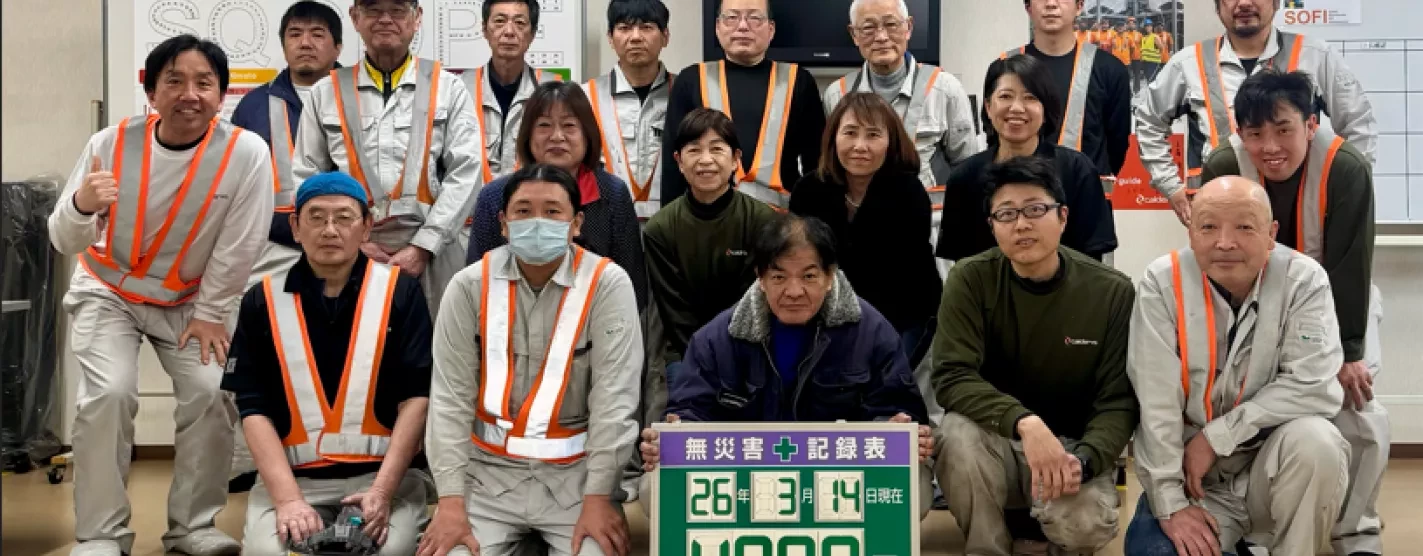
At the same time, the site recently hosted a successful CALDE® SOL GUN demonstration, bringing together teams from Japan, Korea, and Taiwan to strengthen technical expertise and share best practices across the region.
Together, these achievements illustrate a culture of safety, continuous improvement, and strong collaboration across the region.
A robust safety culture built on daily commitment
The Nagoya site’s performance reflects a sustained commitment to safety and a structured approach to continuous improvement. This is underpinned by key initiatives such as the Calderys safe.day, regular EHS audits, gemba walks*, and the SOFI (Safety Opportunity for Improvement) corrective action program, which collectively support the ongoing strengthening of safety management systems.
These initiatives contribute to embedding safety within operational practices and decision-making processes across the organization, in line with Calderys’ global commitment to health and safety excellence.
Learn more on Calderys’ Health & Safety page.
Advancing technical expertise: CALDE® SOL GUN demonstration
Beyond safety, the Nagoya plant continues to contribute to the advancement of Calderys’ technical capabilities across the APAC region. The site recently hosted a CALDE® SOL GUN demonstration, bringing together teams from Japan, Korea, and Taiwan, alongside customer and installation partner Deukil Furnace.
Following the recent introduction of CALDE® SOL GUN in the Korean thermal incinerator market—where installation quality and process stability are critical—the demonstration supported the transfer of application knowledge developed in Japan over the past three years.
The session enabled hands-on evaluation and technical exchanges, facilitating alignment on best practices to support consistent and efficient deployment as the solution is progressively rolled out across the region.
*A Gemba Walk is a leadership practice where managers go to the front lines to observe safety/processes, engage with employees, and identify opportunities for improvement